What is Salesforce Pardot? Guide to B2B Marketing Automation
Master Salesforce Pardot for marketing automation. Meanwhile, streamline lead management, increase conversions, and boost ROI.
Contact Us
B2B marketing teams face a common challenge: managing hundreds of leads while personalizing every interaction. Salesforce Pardot, now rebranded as Marketing Cloud Account Engagement, solves this problem through intelligent automation that connects marketing efforts directly to sales outcomes.
What is Salesforce Pardot?
Pardot is a B2B marketing automation platform built on Salesforce CRM. It helps businesses identify, nurture, and convert prospects by automating repetitive marketing tasks while tracking every customer interaction.
The platform works by tracking two key dimensions: the information you've collected (form submissions, CRM data, third-party sources) and real-time behavioral signals (page views, content downloads, email engagement). This dual approach creates comprehensive buyer profiles that inform every marketing decision.
Salesforce acquired Pardot in 2013 as part of its acquisition of ExactTarget. In 2022, Salesforce rebranded it to Marketing Cloud Account Engagement, though many users and resources still refer to it as Pardot. The platform operates as a core component of Salesforce's marketing ecosystem, tightly integrated with Sales, Service and Data Cloud.
Pardot vs Salesforce CRM: Understanding the Difference
Salesforce CRM manages qualified leads, tracking opportunities, accounts, contacts, and closed deals for sales teams.
Pardot handles early-stage marketing. It captures anonymous visitors, converts them through gated content, nurtures via campaigns, and qualifies before sales handoff ensuring reps focus on interested buyers, not cold contacts.
Together, Pardot feeds qualified contacts to Salesforce, while the CRM returns opportunity data for continued engagement and upsells.
Core Features That Drive Results
Lead Generation and Capture
Customizable forms and landing pages capture visitor information effectively. Progressive profiling builds complete profiles by requesting different details across multiple visits starting with basic contact info, then company details, then specific needs, without overwhelming visitors with lengthy forms.
Marketing Automation and Lead Nurturing
Engagement Studio creates automated, multi-step campaigns triggered by specific actions. When someone downloads a whitepaper, they automatically receive case studies, video demos, and consultation offers in a timed sequence.
Drip campaigns deliver educational content on scheduled intervals, guiding contacts through the buying journey. Once set up, these sequences run continuously with personalized timing based on individual engagement.
Lead Scoring and Grading
Scoring tracks behavioral engagement email opens, page visits, resource downloads, webinar attendance. Each action adds points indicating purchase readiness.
Grading evaluates demographic fit based on job title, company size, industry, and location against your ideal customer profile.
Combined, these metrics identify marketing qualified leads (MQLs) highly engaged contacts matching your target profile who are ready for sales outreach.
Email Marketing
Drag-and-drop templates simplify campaign creation. A/B testing optimizes subject lines, content, and send times. Dynamic content personalizes messages for different segments showing healthcare testimonials to medical contacts and manufacturing case studies to industrial buyers.
Analytics and Reporting
Track which campaigns drive conversions, which landing pages generate qualified leads, and how marketing activities influence revenue. Campaign Influence reporting connects marketing efforts to closed deals, while B2B Marketing Analytics provides dashboards showing pipeline contribution, lead velocity, and engagement trends.
2026 Updates: What's New in Pardot
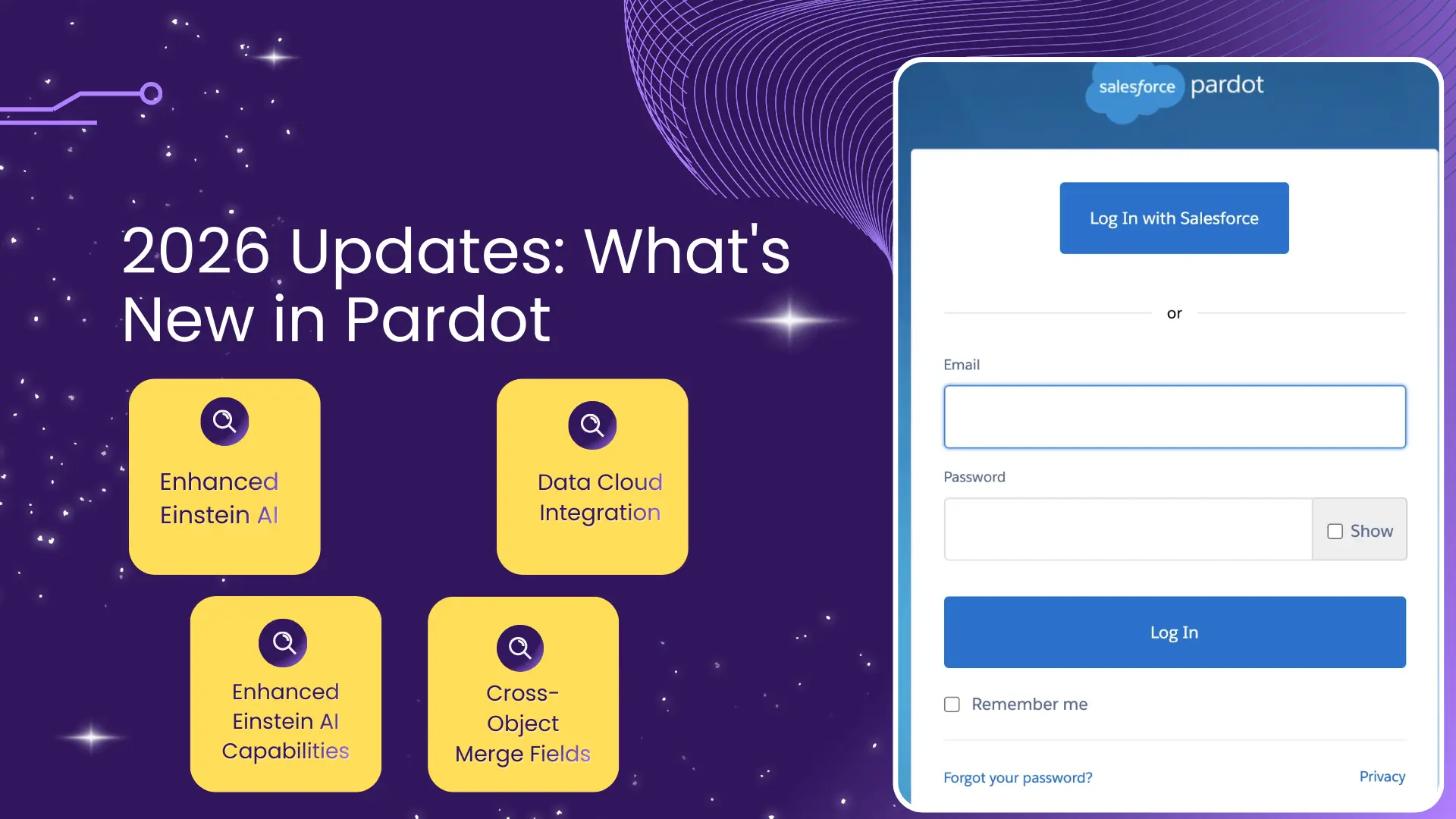
Enhanced Einstein AI Capabilities
Einstein now powers predictive lead scoring, campaign insights, and send time optimization. The AI analyzes historical data to identify prospects most likely to convert and suggests optimal engagement strategies.
Cross-Object Merge Fields
Pull data from any Salesforce object into Pardot emails and landing pages. Reference opportunity amounts, custom objects, or related records for deeper personalization.
Data Cloud Integration
Connect Pardot to unified customer profiles spanning all Salesforce touchpoints. Marketing automation now leverages data from support interactions, purchase history, and product usage patterns for more contextual campaigns.
Enhanced Einstein AI
Predictive lead scoring uses machine learning to identify prospects most likely to convert, even before they show traditional engagement signals. Einstein Campaign Insights automatically surfaces optimization opportunities across your email and landing page programs.
How Pardot Works With Salesforce
Bidirectional sync keeps data flowing between both platforms in real-time. Form submissions create Salesforce leads instantly, while CRM updates reflect immediately in Pardot.
This enables closed-loop reporting where marketing tracks campaign revenue and sales accesses engagement history. The connector syncs leads, contacts, accounts, opportunities, and campaigns triggering automated workflows that create tasks, update fields, or change lead status.
Common Use Cases That Deliver ROI
Pricing and Editions (2026)
Pardot offers four editions based on features and database size:
All editions require Salesforce CRM licenses. Additional contacts can be purchased in blocks of 10,000 as your database grows.
Pardot vs Alternatives: Making the Right Choice
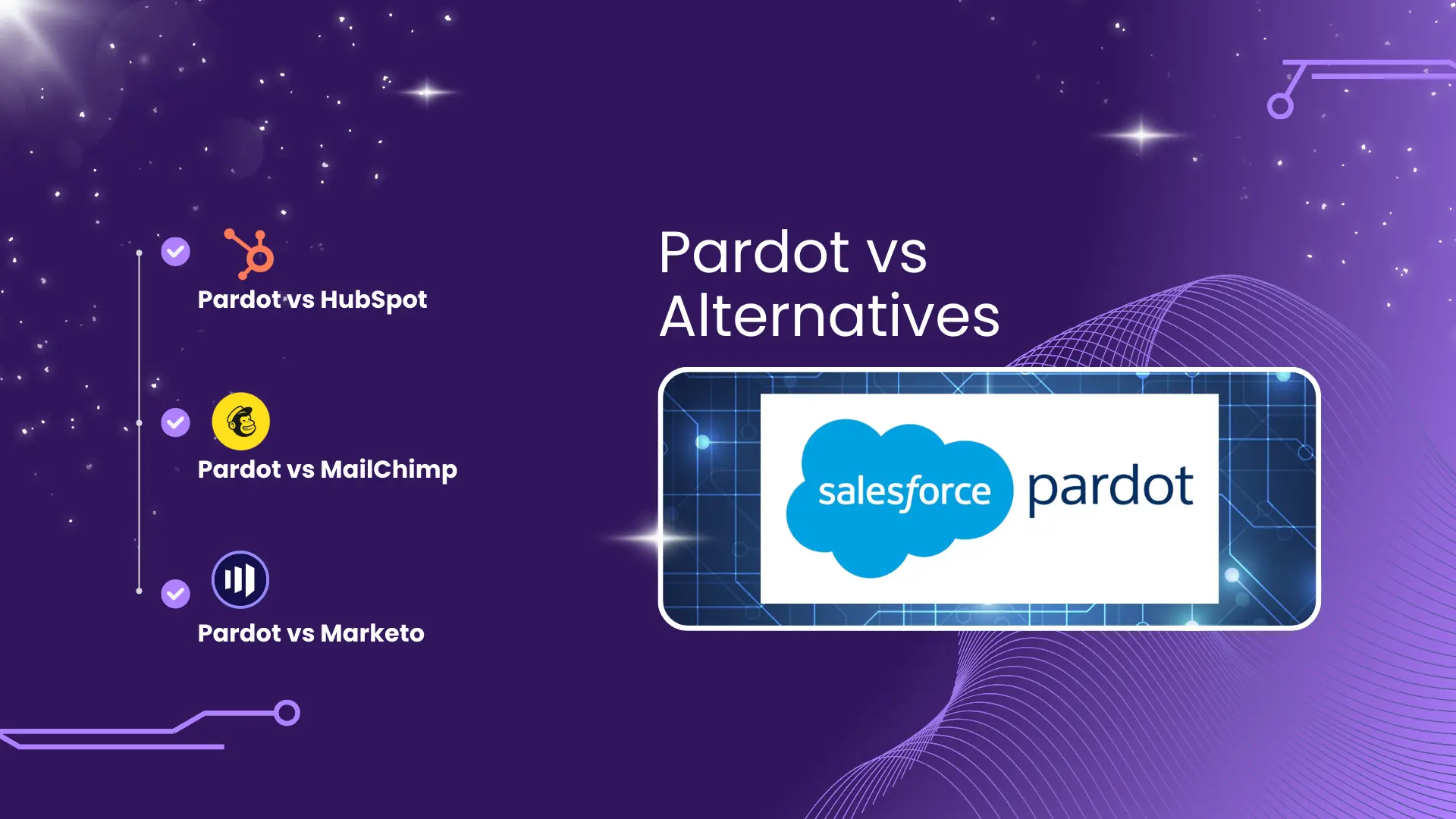
Pardot vs HubSpot
HubSpot excels at inbound marketing with stronger content management and social media tools. Pardot wins for sales enablement and deep Salesforce integration. Choose HubSpot for content-heavy strategies, Pardot for complex sales cycles requiring tight CRM alignment.
Pardot vs MailChimp
MailChimp suits small businesses needing basic email marketing. Pardot serves B2B organizations with considered purchases requiring lead scoring, nurturing workflows, and sales collaboration.
Pardot vs Marketo
Both handle enterprise B2B marketing, but Marketo offers more flexibility for complex implementations. Pardot provides easier adoption and better value for Salesforce customers.
Limitations and Considerations
Pardot requires Salesforce CRM; there's no standalone option. Initial setup demands technical expertise, particularly for tracking code installation and connector configuration.
The platform focuses on B2B marketing with longer sales cycles. B2C businesses with transactional sales often find Marketing Cloud or simpler tools more appropriate.
Email and landing page customization has limitations compared to dedicated design platforms. Complex visual designs may require developer assistance.
Smaller businesses under 10,000 contacts might find the Growth edition sufficient, but growth requires budget planning for higher tiers.
Getting Started: Implementation Roadmap
Learning Resources and Certification
Salesforce Trailhead offers free learning paths covering Pardot basics, email marketing, automation, and reporting. The Pardot Specialist certification validates foundational knowledge, while Pardot Consultant certification demonstrates advanced implementation skills.
Join the Pardot community for best practice discussions, attend Salesforce events for hands-on training, and explore partner resources for implementation support.
Final Thoughts
Pardot transforms B2B marketing from manual tasks to strategic campaigns that drive measurable revenue. The platform's strength lies in its Salesforce integration, creating unified customer experiences from first website visit through post-sale engagement.
Success requires commitment to proper setup, ongoing optimization, and sales-marketing alignment. Organizations that invest in training and best practices see improved lead quality, shorter sales cycles, and clear attribution of marketing's revenue contribution.
For B2B companies using Salesforce CRM with complex sales processes, Pardot provides the automation infrastructure needed to scale marketing efforts while maintaining personalized prospect experiences.
Frequently Asked Questions

Yes. Salesforce continues investing heavily in the platform, recently adding Agentforce AI capabilities and Data Cloud integration. The rebrand to Marketing Cloud Account Engagement signals long-term commitment.
While designed for B2B, Pardot works for B2C businesses with high-value products and longer consideration periods—luxury goods, financial services, or education. Pure transactional B2C suits Marketing Cloud better.
Basic setup completes in 2-4 weeks. Full implementation with advanced automation, custom scoring, and team training typically requires 2-3 months.
One dedicated marketer can manage Pardot for smaller implementations. Growing programs typically need 2-3 team members—marketing operations, email specialist, and campaign manager.
No for basic use. Advanced customizations like complex landing pages, custom tracking, or API integrations benefit from developer support.
Tech Implement specializes in Salesforce marketing automation, from initial setup to advanced campaign optimization. Contact us for a free consultation on maximizing your Pardot investment.