The Ultimate Guide to Automotive CRM For Winning More Sales
Automotive CRM guide for dealerships. Learn features, benefits, mistakes to avoid, and how CRM boosts sales, service, and customer retention.
Contact Us
Automotive CRM is specialized software built for car dealerships, showrooms, and auto service businesses to manage customer relationships across sales, service, and marketing. It centralizes customer data like inquiries, vehicle preferences, test drive bookings, and service history, making it easier to track leads, schedule follow ups, and deliver a smooth customer experience from first contact to long term retention.
Unlike general Automotive CRM software systems are designed around the fast paced and transactional nature of the automobile industry. Sales teams use it to automate lead management, follow ups, and deal closures, while service centers rely on it for maintenance reminders, warranty tracking, and after sales communication. This focused approach helps teams work faster and respond to customers more accurately.
What truly sets an Automotive CRM apart is its industry specific workflow and integrations. It supports features such as inventory and DMS integration, finance and insurance tools, document digitization, service reminders, and upsell or cross sell recommendations for accessories. These capabilities make it a practical, end to end solution tailored specifically to how automotive businesses operate.
Why Automotive Businesses Need a CRM Today
The auto industry is evolving quickly with the rise of electric vehicles, digital financing, and connected car technologies. This growth is expanding beyond major cities into Tier 2 and Tier 3 markets, increasing the need for smarter, data-driven systems to manage modern customer journeys.
Automotive CRM software helps dealerships organize every customer touchpoint while providing clear insights into sales performance, deal progress, and team productivity. It allows leaders to make informed decisions without adding operational burden.
For single dealerships or large dealer groups, an automotive-focused CRM forms the backbone of a competitive operation. When paired with AI-driven workflows, it enables faster engagement, better conversions, and stronger long-term customer relationships.
Learn more about: Master CRM Challenges in 2025 to Drive Business Growth
Why Automotive Businesses Can’t Ignore CRM
How Does Automotive CRM Work?
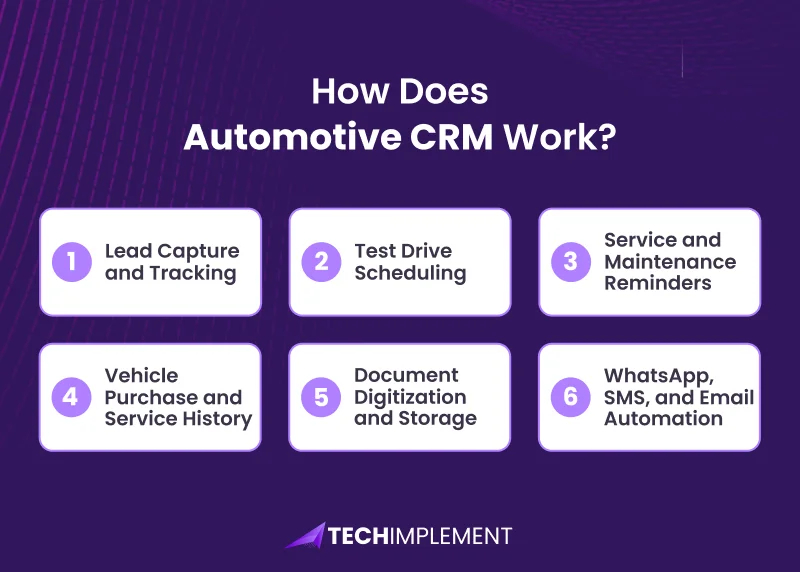
Automotive CRM acts as a central hub for sales, service, and marketing teams, keeping every customer interaction organized and actionable. It streamlines the entire customer journey—from capturing leads to managing post-sale service—so teams can track, follow up, and personalize every touchpoint. By providing a complete view of each customer, it helps dealerships improve engagement, boost sales, and deliver a more efficient, professional experience.
1. Lead Capture and Tracking
A CRM centralizes all incoming leads in one place, whether they come from the dealership website, online ads, third-party car portals, or showroom walk-ins. Each inquiry is automatically captured, categorized, and routed to the right sales executive using smart rules like location, availability, or product knowledge. This structured tracking ensures no lead is missed, follow-ups happen faster, and sales teams can respond at the right time, improving lead quality and conversion rates.
Key Benefits:
2. Test Drive Scheduling
A smart test drive scheduling system helps dealerships manage bookings without back-and-forth calls or manual tracking. Sales teams can quickly schedule, reschedule, or confirm test drives while the system automatically checks vehicle availability and open time slots. Customers receive instant confirmations and reminders, and staff are notified ahead of each appointment. This organized approach reduces no-shows, avoids double bookings, and ensures vehicles and sales reps are ready on time, creating a smoother and more professional test drive experience.
Key Benefits
3. Service and Maintenance Reminders
Automated service and maintenance reminders help dealerships stay connected with customers long after the sale. Timely alerts for routine servicing, warranty renewals, and insurance updates are sent with personalized details, so customers know exactly what is due and when. This proactive approach shows professionalism, builds trust, and positions the dealership as a reliable long-term partner. As a result, customers are more likely to return to the same service center for future maintenance, increasing retention and lifetime value.
Key Advantages:
4. Vehicle Purchase and Service History
A CRM captures every detail of a customer’s vehicle journey—from purchase history and service records to past issues—creating a complete profile that includes contact info, preferred models, budget, financing eligibility, trade-ins, and actions like test drive requests. With this 360-degree view, sales and service teams can engage at the right time with personalized and relevant offers, such as trade-ins, upgrades, or extended warranties, based on real behavior rather than guesswork.
Key Advantages:
5. Document Digitization and Storage
All essential documents such as RC copies, insurance papers, loan approvals, and service invoices are securely digitized and stored inside the CRM. This removes the need for manual files, reduces errors, and saves time across teams. Sales and service staff can instantly access the right documents while assisting customers, which speeds up insurance renewals, loan processing, and service follow ups. With centralized and secure storage, businesses maintain better control, compliance, and professionalism while delivering a smoother customer experience.
Key Benefits:
6. WhatsApp, SMS, and Email Automation
CRMs centralize customer communication, enabling dealerships to deliver messages efficiently and consistently. WhatsApp automation allows instant replies, test drive confirmations, and timely follow-ups, while SMS and email campaigns handle promotions, service reminders, and post-sale updates. Managing all channels from the CRM helps nurture leads, reduce missed opportunities, and maintain strong customer relationships.
Key Advantages:
How Automotive CRM Drives Success for Dealerships
Automotive CRM centralizes leads, service bookings, and customer interactions, helping dealerships streamline operations and improve customer relationships. This list highlights real-world benefits and shows how the software makes them possible.
Faster Lead Conversion
An automotive CRM speeds up the sales process by automatically distributing leads from websites, comparison portals, and walk-ins to the right sales consultants based on location, budget, and model interest. Automated follow-ups via email or WhatsApp guide prospects toward test drives and approvals efficiently. According to Nucleus Research, dealerships used to earn about $8.70 for every dollar spent on CRM in 2014, but by 2023, the average return had dropped to $3.10 per dollar.
Better Customer Retention
In the automotive industry, keeping customers long-term depends on ongoing engagement after the sale. A CRM helps dealerships track service history, warranty status, and past purchases, allowing them to send personalized offers like free check-ups or discounted maintenance. This consistent follow-up not only builds trust but also encourages repeat servicing, upgrades, and future vehicle purchases, increasing Customer Lifetime Value and strengthening dealer-customer relationships.
Improved Service Center Bookings
CRM service scheduling modules help workshops maximize capacity by managing available slots, technician schedules, and spare part inventory. Automated reminders ensure customers stay on top of periodic maintenance, boosting service bay utilization and reducing downtime. This not only increases revenue per service center but also enables more accurate operational planning and efficient resource allocation.
Automated Insurance and RC Reminders
CRMs track customers’ insurance, registration, and warranty details. They send automatic reminders through SMS, email, or WhatsApp so customers can renew on time. This keeps customers engaged, builds trust, and encourages repeat sales of insurance and warranty add-ons.
Efficient Inventory Management
Integrated real-time inventory tracking allows sales teams to instantly check availability, reserve vehicles for buyers, and update stock after each sale. Trusted by leading dealerships, this system reduces order delays, prevents overselling of popular models, and ensures efficient allocation across multiple variants.
Higher Upselling and Cross-Selling Rates
By analyzing a customer’s vehicle history, financing details, and service patterns, dealerships can recommend the right upgrades, accessories, or extended warranties at the perfect time. CRM-driven insights let sales teams increase revenue per customer while reducing the cost of acquiring new buyers, boosting both efficiency and profitability.
Practical Use Cases for Marketing, Sales & Service Teams
Marketing Teams
Marketing teams use customer data like vehicle model, purchase cycle, and service habits to create targeted campaigns. Automated messages via SMS, WhatsApp, and email promote trade-ins, accessories, or seasonal services efficiently. By connecting sales, service, and marketing on a single platform, automotive CRM streamlines workflows, boosts engagement, and drives revenue while enhancing customer satisfaction.
Sales Teams
Sales teams use Automotive CRM to capture and organize leads from websites, walk-ins, and ads, ensuring no opportunity is missed. The system manages test drive bookings, follow-up reminders, and quotation approvals, reducing delays and keeping prospects engaged. Access to purchase intent data and past interactions helps staff recommend the right vehicle, close deals faster, and drive sales in competitive segments like SUVs and EVs.
Service Teams
Automotive CRM helps service teams stay organized and proactive. It keeps complete service histories, tracks warranties, and sends automated maintenance reminders. Insurance renewals and extended warranty offers can also be scheduled directly through the system. This ensures repeat appointments, maximizes bay utilization, and lets teams provide timely, expert service every time.
Choosing the Right Automotive CRM for Your Dealership
Selecting the right Automotive CRM goes beyond features—it’s about how well it supports daily operations, team collaboration, and long-term growth. Here are the key factors to consider:
Here is the Best CRM Software Options for Automotive Industry
Top automotive CRMs help dealerships manage leads, customer relationships, and sales more effectively.
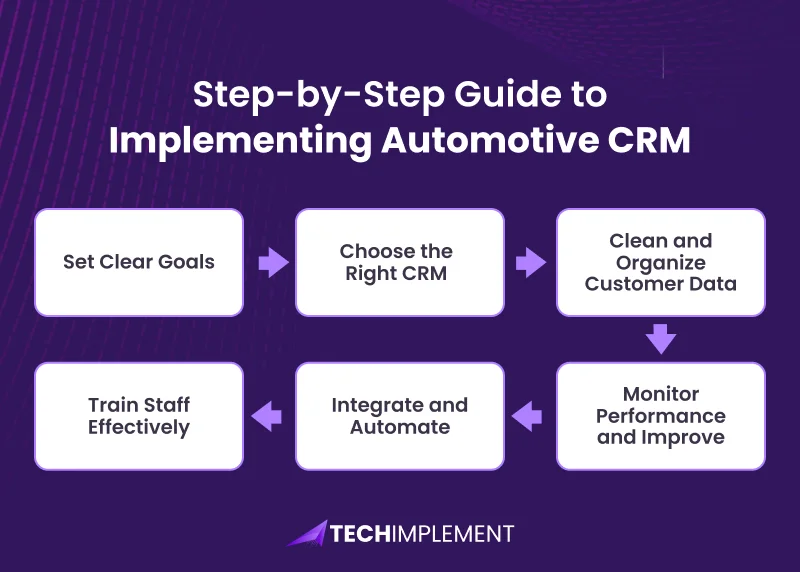
Step-by-Step Guide to Implementing Automotive CRM
1. Set Clear Goals
Begin by defining measurable objectives for your dealership. For sales, this could be reducing lead response times or improving test drive-to-sale conversions. Service teams may focus on increasing repeat bookings or automating warranty reminders. Clear targets ensure your CRM delivers real value instead of becoming an unused tool.
2. Choose the Right CRM
Pick a platform that fits your resources and needs. SaaS CRMs are ideal if your IT team is small, as vendors handle hosting, updates, and security. Larger dealer groups may prefer open-source solutions for deeper customization, like integrating loan workflows or service modules. Look for automotive-specific templates to speed up setup.
3. Clean and Organize Customer Data
Prepare for a smooth CRM launch by consolidating and standardizing customer records—vehicle purchases, service history, loan info, and insurance details. Even basic spreadsheets benefit from cleaning. Accurate data enables personalized communication and reliable reporting from day one.
4. Train Staff Effectively
Staff adoption determines success. Provide role-specific training: sales teams should focus on lead updates and follow-ups, while service advisors learn warranty tracking and reminders. If internal training isn’t possible, choose vendors with onboarding support or simple, guided modules.
5. Integrate and Automate
Connect your CRM with your Dealer Management System, inventory tools, and payment platforms for real-time updates and automated processes like insurance renewals or service reminders. Use automation for SMS or WhatsApp notifications to ensure leads and service reminders are never missed.
6. Monitor Performance and Improve
Track metrics like lead response times, conversion rates, service bookings, and upsells through dashboards. Start with basic reports if your dealership is small; larger operations can customize analytics by vehicle model and campaign ROI. Use these insights to refine sales scripts, service offers, and marketing strategies.
Common Mistakes to Avoid with Automotive CRM
Failing to Customize for Dealership Operations
Many dealerships rely on standard CRM templates, which often don’t match real workflows. Without customization, processes like lead qualification, test-drive scheduling, RC and insurance tracking, and service lifecycle management can become inefficient. Tailoring modules for sales, service, and finance teams ensures smoother adoption and accurate data. Learn more about the CRM for financial advisors is key to faster business growth.
Rushing Advanced Features
Introducing complex CRM features too soon can confuse staff and slow daily operations. Start with essentials like lead tracking, follow-up automation, and service reminders. Gradually add modules such as inventory management or advanced analytics once the team is comfortable.
Overlooking Mobile Access
Sales and service teams often work in the field. A CRM without mobile access or offline syncing limits real-time updates on leads, bookings, and service follow-ups. Prioritize mobile-friendly solutions for your staff.
Weak Post-Sale Engagement
Stopping customer interactions after the sale reduces repeat business. Use the CRM to schedule warranty notifications, renewal reminders, and personalized service offers. Structured follow-ups strengthen customer relationships, boost repeat sales, and encourage referrals.
FAQs About Automotive CRM

A CRM in the automotive industry manages all customer information, including purchase history, financing options, service appointments, communication preferences, and upgrade interests. It ensures every interaction is informed and relevant, even though it doesn’t physically reside in the vehicle.
The Tech Implement automotive CRM solution is widely used by large dealer networks and OEMs. Its strong integration, lead management, and automation features make it ideal for tracking leads, managing workflows, and improving customer engagement.
Yes. Two-wheeler dealers can track walk-in leads, schedule test rides, manage service bookings, and send reminders for insurance or maintenance, helping build loyalty in a competitive market.
Absolutely. CRM captures leads from multiple sources, prioritizes hot prospects, and automates timely follow-ups, which boosts test-drive bookings, improves lead conversion, and directly increases vehicle sales.
Most modern CRMs are user-friendly. A few basic training sessions are enough for sales and service teams, and vendors provide onboarding support and tutorials for smooth adoption.
Reputable CRM platforms protect customer data with encryption, role-based access, and regular backups. Many comply with GDPR and local IT laws to maintain privacy and security standards.
Dealerships typically notice faster lead responses and better service bookings within two to three months when the CRM is used consistently and workflows are properly configured.