CRM Software For Real Estate: A Complete Guide
Learn how real estate CRM software helps agents track leads, streamline workflows, and close deals faster—plus tips on choosing the right solution.
Contact Us
The real estate industry runs on relationships and timing. Managing leads, nurturing connections, and closing deals requires organization and responsiveness. CRM software has become essential for real estate professionals who want to stay competitive and grow their business effectively.
Today's successful agents use CRM technology to outperform competitors who rely on spreadsheets and manual tracking. This guide covers everything you need to know about real estate CRM software, from basic functions to choosing and implementing the right solution.
Defining Real Estate CRM: What It Is and What It Does?
A Real Estate CRM is specialized software that helps agents, brokers, and property managers organize and track client relationships throughout the sales cycle. Unlike generic systems, real estate customer relationship management is built specifically for property business workflows and challenges.
The software serves as a centralized hub for storing contact information, tracking communications, managing listings, scheduling follow-ups, and automating repetitive tasks. It acts as your digital assistant that never forgets details or misses follow-ups.
Real estate CRMs capture data from multiple sources including website inquiries, open houses, phone calls, emails, and social media. The system organizes this information into actionable insights, helping you prioritize leads based on engagement and readiness to transact.
The platform integrates with email, calendars, marketing tools, and MLS platforms. This creates seamless workflows where property details automatically sync with client preferences, matching buyers with suitable listings without manual searching.
Types of Real Estate CRMs
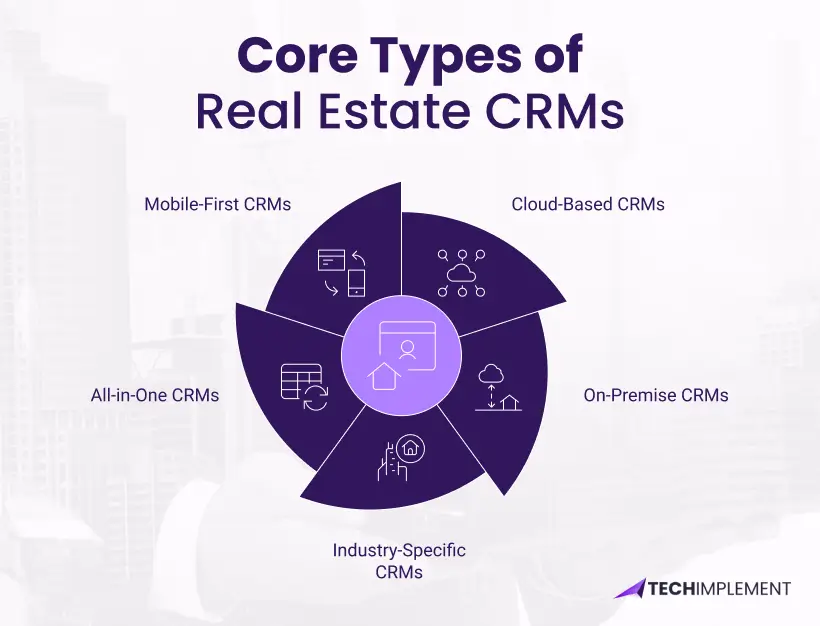
Understanding different CRM types helps you choose the right fit for your business model and technical capabilities.
Cloud-Based CRMs
They operate entirely online through web browsers and mobile apps. These systems store data on remote servers, making it accessible anywhere with internet connection. They offer automatic updates, minimal IT requirements, and work-from-anywhere flexibility on subscription-based pricing.
On-Premise CRMs
They install directly on your company's servers and computers. This option provides complete data control and customization but requires significant upfront investment in hardware, licenses, and IT support. Larger brokerages with technical teams often prefer this approach.
Industry-Specific CRMs
These customer relationship management systems are designed specifically for real estate professionals. They come with pre-configured features such as listing management, open house scheduling, commission tracking, and MLS integration. They are tailored to the real estate sales cycle and include templates for common scenarios.
All-in-One CRMs
These All-in-One CRMs combine relationship management with marketing automation, transaction management, and sometimes website hosting. They eliminate the need for juggling multiple software subscriptions, acting as your single source of truth.
Mobile-First CRMs
Mobile-First systems prioritize smartphone and tablet functionality for agents who work primarily in the field. These systems offer robust mobile apps with offline capabilities, voice recording, photo uploads, and quick access to client information during showings.
Why CRM Is Important for Real Estate Agents
Real estate success depends on relationships and timing. CRM systems address both elements by ensuring no opportunity gets overlooked or forgotten.
Research shows 44% of consumers trust agents who demonstrate knowledge of their specific needs and preferences. CRMs make this personalization possible by tracking every interaction, preference, and requirement clients share with you.
Real estate transactions involve long sales cycles with multiple touchpoints. Buyers might browse properties for months before deciding. Consistent, relevant communication keeps you top-of-mind throughout this journey. Without CRM, maintaining engagement across dozens of contacts becomes overwhelming.
Time management becomes critical when working with 20-50 active clients while prospecting for new leads. CRMs automate routine tasks like follow-up reminders, birthday greetings, property alerts, and market updates, freeing hours weekly for revenue-generating activities.
The financial impact is measurable. Agents using CRM systems close more deals faster because they identify hot leads quickly, respond to inquiries immediately, and provide better service throughout transactions. Pipeline tracking helps forecast income and plan growth strategies.
CRMs also create business continuity. When team members leave or new agents join, all client history and transaction details remain accessible rather than disappearing in personal notebooks or email accounts.
Take Your Real Estate Business to the Next Level with Tech Implement
Technology adoption in real estate has shifted from optional to essential. Thriving agents embrace digital tools to enhance rather than replace the human elements of their service.
Implementing CRM technology fundamentally changes your business approach. You move from reactive relationship management to a proactive system that strategically nurtures relationships at scale.
The transition requires initial investment in time, training, and money, but returns compound over time. The first 30-60 days involve learning curves as you migrate contacts, customize workflows, and develop new habits. Most agents then wonder how they managed without these tools.
Success depends on choosing systems that integrate with existing tools. Your CRM should work seamlessly with email, calendar, marketing software, and MLS access. This integration eliminates duplicate data entry and creates unified business operations.
Start with core functionality rather than implementing every feature immediately. Focus first on contact management and basic automation, then gradually add advanced features like marketing campaigns, transaction management, and analytics as you gain comfort.
What Are the Benefits of Using CRM in Real Estate?
CRM software transforms real estate business management by delivering measurable improvements across multiple areas.
What You Can Expect from Real Estate CRM Software
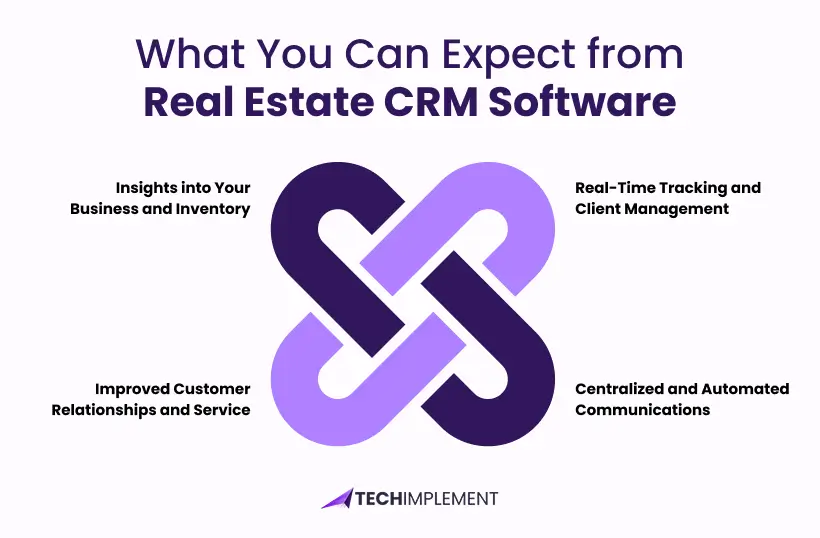
Modern real estate customer relationship management platforms deliver comprehensive capabilities designed for property professionals' specific needs.
Insights into Your Business and Inventory
Your CRM transforms raw data into actionable business intelligence. The system tracks which properties receive most inquiries, which price ranges attract qualified buyers, and which neighborhoods are trending in your market.
Inventory management features automatically match properties with buyer preferences. When new listings meet client criteria for location, price, size, and amenities, the system alerts them immediately, positioning you as their go-to resource.
Performance dashboards show pipeline health at a glance. You see lead quantities at each sales funnel stage, forecast potential commission income from properties under contract, and identify bottlenecks where deals consistently stall.
Market analysis tools aggregate transaction data to reveal patterns. You might discover properties priced within specific ranges sell faster, or virtual tours increase showing requests. These insights inform listing presentations and buyer counseling conversations.
Real-Time Tracking and Client Management
Tracking every client interaction in real-time creates complete relationship histories that inform better conversations and decisions. When clients call, you instantly see recent property views, last communication, scheduled appointments, and pending action items.
Activity tracking captures emails, calls, texts, property showings, and document exchanges automatically. This eliminates manual logging while ensuring nothing gets forgotten. Timeline views show exactly where each relationship stands and what happens next.
Mobile access means your CRM travels to showings, open houses, and client meetings. You pull up property details, update client notes, schedule follow-ups, and send contracts for electronic signature without returning to the office.
Task automation ensures important actions never fall through cracks. The system automatically creates follow-up tasks after showings, reminds you about expiring financing pre-approvals, or prompts market update emails to sellers every two weeks.
Improved Customer Relationships and Service
Personalization at scale becomes achievable when CRMs remember details impossible to track manually. The system notes client communication preferences, property requirements like fenced yards for pets, or personal details mentioned during casual conversations.
Standardized workflows ensure that you provide every client with the same high-quality experience, regardless of how busy you are. You automatically send welcome packets to new buyers, provide weekly updates to sellers, and send quarterly reports to past clients.
Relationship depth increases through strategic touchpoint planning. Customer relationship management schedules check-ins at meaningful intervals throughout the year, not just when seeking business. Birthday wishes, home anniversaries, and market insights keep you present as a trusted advisor.
Response speed improves dramatically with automated acknowledgment and information delivery. When someone inquires about listings at 9 PM, they receive property details and show availability automatically rather than waiting until morning.
Centralized and Automated Communications
Communication consolidation brings all client interactions into one platform, regardless of the channel. Whether clients contact you via email, text, social media, or phone, everything gets logged and accessible from a single interface.
Email marketing automation allows sophisticated nurture campaigns that deliver value over time. You create different tracks for buyers versus sellers, first-time homebuyers versus investors, and luxury clients versus budget-conscious shoppers with relevant content for each.
Template libraries speed routine communications while maintaining personalization. Instead of writing the same property showing confirmation from scratch, you use templates that automatically insert client names, property addresses, and showing times.
Bulk communication features let you send market updates, listing alerts, or event invitations to segmented groups while maintaining personal touches through merge fields and conditional content based on stated preferences.
How to Implement Real Estate CRM
Successful CRM implementation follows a structured approach that minimizes disruption while maximizing adoption and value.
Start with Data Migration and Cleanup
Before importing contacts, clean your existing database. Remove duplicates, update outdated information, and categorize contacts by type. Quality data input ensures quality insights output without carrying over years of clutter.
Configure Your System to Match Your Workflow
Customize fields, pipelines, and automation rules to reflect how you actually work. Define lead stages, create custom fields for regularly tracked information, and set up property matching criteria aligned with your market.
Integrate Essential Tools Early
Connect email, calendar, and marketing platforms during initial setup. These integrations provide immediate value by eliminating duplicate data entry and creating complete activity records. Configure MLS integration if available for automatic property updates.
Train Thoroughly Before Full Deployment
Invest time learning the platform through vendor training resources, video tutorials, and practice scenarios. Many implementation failures stem from insufficient training rather than poor software choice. Ensure team members receive consistent training.
Start with Core Functions Then Expand
Begin using basic contact management and activity tracking before layering on advanced automation. This gradual approach prevents overwhelm and builds competence progressively. Add marketing automation, transaction management, then advanced analytics as core functions become habitual.
Establish Data Entry Habits and Standards
Create simple rules for how teams enter information to maintain consistency. Decide on naming conventions, required fields for new contacts, and update frequency standards for effective searching, segmentation, and reporting.
Monitor Adoption and Address Resistance
Track system usage in the first 90 days and identify who's struggling or avoiding the platform. Address concerns quickly through additional training or workflow adjustments while regularly communicating wins and time savings.
How to Pick the Best CRM for Real Estate
Selecting the right customer relationship management requires evaluating options against your specific business needs, budget, and technical comfort level.
Assess Your Business Requirements First
Consider team size, transaction volume, budget, and technical expertise before comparing platforms. Solo agents have different needs than 20-person teams, and luxury specialists require different features than volume-focused agents.
Prioritize Real Estate-Specific Features
Look for platforms understanding real estate workflows including listing management, MLS integration, commission tracking, and transaction pipeline management. Generic business CRMs work but require extensive customization for real estate needs.
Evaluate Integration Capabilities
Your CRM should connect with tools you already use including email platforms, calendar systems, marketing automation software, transaction management systems, and ideally MLS. Native integrations work more reliably than third-party connections.
Consider Mobile Functionality
Real estate agents work in the field more than at desks, so robust mobile apps with offline capability are essential. Test mobile interfaces for common tasks like accessing client details, logging showing notes, and scheduling follow-ups.
Test Customer Support Quality
Problems inevitably arise with any software, so responsive and knowledgeable support makes the difference between minor hiccups and business disruption. Check available support channels, response time commitments, and self-service training resources.
Calculate Total Cost of Ownership
Look beyond monthly subscription fees to consider implementation costs, training time, integration expenses, and potential add-on charges. Sometimes higher base prices with inclusive features cost less overall than cheap platforms with expensive add-ons.
Here are the best CRM software options for real estate businesses.
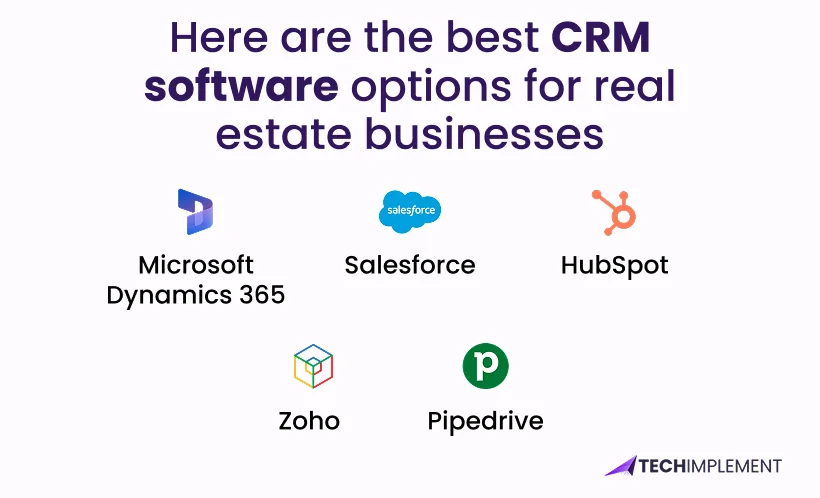
Microsoft Dynamics 365
Microsoft Dynamics 365 offers enterprise-grade customer relationship management capabilities with deep integration into the Microsoft ecosystem. If your business already uses Outlook, Teams, and other Microsoft products, Dynamics provides seamless connectivity that eliminates platform switching.
The platform excels in customization, allowing you to tailor almost every aspect to match specific business processes. This flexibility makes it ideal for larger brokerages with unique workflows or teams needing sophisticated automation beyond standard processes.
Advanced analytics and AI-powered insights help identify sales pipeline patterns, predict which leads will likely convert, and recommend next-best actions for each client relationship. The learning curve is steeper but rewards investment for teams leveraging advanced features.
Pricing operates on per-user, per-month models with different tiers based on feature access. The investment level positions Dynamics as an enterprise solution rather than an entry-level choice for solo agents or small teams.
Salesforce
Salesforce built its reputation as the world's leading customer relationship management platform across all industries, offering unmatched customization, scalability, and integration options. Real estate teams use Salesforce when needing platforms that grow from a handful of agents to hundreds without system changes.
The AppExchange marketplace provides thousands of pre-built integrations and real estate-specific extensions that add functionality without custom development. You find apps specifically for listing management, client portals, commission tracking, and marketing automation tailored to real estate.
Salesforce shines in complex team environments where transaction coordination involves multiple roles including listing agents, buyer agents, transaction coordinators, marketing specialists, and brokers. Permission controls and workflow automation ensure appropriate information access at appropriate times.
The platform requires significant configuration to optimize for real estate, and most teams benefit from working with Salesforce consultants during implementation. Pricing reflects enterprise positioning, with costs increasing as you add users and enable advanced features.
HubSpot
HubSpot combines CRM with inbound marketing tools in a platform known for user-friendly interfaces and generous free tiers. Real estate professionals appreciate starting with free contact management and email marketing, then adding paid features as businesses grow.
The marketing hub includes website builders, landing pages, email campaigns, social media scheduling, and blog tools that help attract leads organically. This integrated approach eliminates needs for separate marketing and customer relationship management platforms, simplifying technology stacks.
Its automation capabilities create sophisticated nurture campaigns that deliver the right content based on client behavior and preferences. When someone downloads neighborhood guides, they automatically enter campaigns providing relevant local market insights over time.
The platform works particularly well for agents building brands and focusing on content marketing to attract clients. The learning curve is gentle, with extensive free training through HubSpot Academy helping maximize platform value.
Zoho
Zoho CRM delivers robust functionality at price points accessible to solo agents and small teams. The platform offers nearly every feature available in expensive alternatives but packages them in straightforward interfaces that don't overwhelm new users.
Customization options allow tailoring it to real estate workflows including creating custom modules for properties, matching buyers with listings based on criteria, and tracking transactions from listing to close. The platform includes built-in email marketing, document management, and workflow automation.
Its ecosystem includes complementary products for email hosting, document creation, project management, and accounting that integrate seamlessly with CRM . This suite approach can replace multiple separate subscriptions, potentially reducing overall technology costs.
The mobile apps provide solid functionality for field work, and the platform's AI assistant helps automate routine tasks and surface insights from data. For real estate professionals wanting advanced features without enterprise pricing, it represents excellent value.
Pipedrive
Pipedrive built its CRM specifically around visual pipeline management, making it exceptionally intuitive for real estate professionals who think in terms of deal stages. The platform's core interface shows exactly where each client sits in sales processes and what action comes next.
Customizable pipelines let you create different workflows for buyers versus sellers, residential versus commercial, or any other relevant distinction. Drag-and-drop functionality makes updating deal stages as simple as moving cards across columns, eliminating data entry burdens.
The platform focuses on doing core CRM functions exceptionally well rather than being all-in-one solutions for every business need. This focused approach results in faster implementation, easier adoption, and cleaner user experiences than platforms solving every problem.
Email integration and communication tracking work seamlessly, automatically logging correspondence and creating activity records without manual effort. While lacking some advanced marketing automation features, its simplicity and pipeline visualization make it ideal for agents prioritizing deal tracking.
Examples of Using CRM for Real Estate Agents
Real-world applications demonstrate how CRM software transforms daily operations and client relationships.
FAQs

Solo agents benefit significantly from CRM systems, often more than teams do. Many platforms offer affordable pricing tiers designed specifically for individual agents. The automation features help you compete with larger brokerages by managing more clients without hiring support staff. You gain the organizational capabilities of a full team while maintaining your independent operation.
Most agents notice immediate improvements in organization and response times within the first week. However, measurable business results like increased closings typically appear after 60-90 days of consistent use. This timeline allows you to build a proper database, establish automated workflows, and nurture leads through complete cycles. Early adopters who commit to daily use see faster returns.
Well-configured CRM automation feels personal rather than robotic to recipients. The key is customizing templates with specific details and timing messages appropriately. Clients appreciate consistent communication and fast responses regardless of the delivery method. Avoid generic bulk messages and focus on segmented, relevant content that addresses individual needs and situations.
Most reputable CRM providers allow you to export your complete database in standard formats like CSV or Excel files. This portability protects your business investment and prevents vendor lock-in. Before committing to any platform, verify their data export policies and test the export function. Some providers also offer migration assistance when switching from competitors.
Modern CRMs are designed for non-technical users with intuitive interfaces and extensive tutorials. Most agents successfully manage their systems without IT backgrounds or dedicated support staff. The learning process resembles mastering any new software like social media platforms or smartphone apps. Vendor support teams assist with complex configurations when needed.
Quality CRM platforms include features that support regulatory compliance including consent tracking, communication preferences, and data retention policies. They provide audit trails showing when and how you contacted clients, which protects you during disputes. However, the CRM is a tool that assists compliance efforts rather than guaranteeing it automatically. You remain responsible for understanding and following applicable laws in your jurisdiction.